
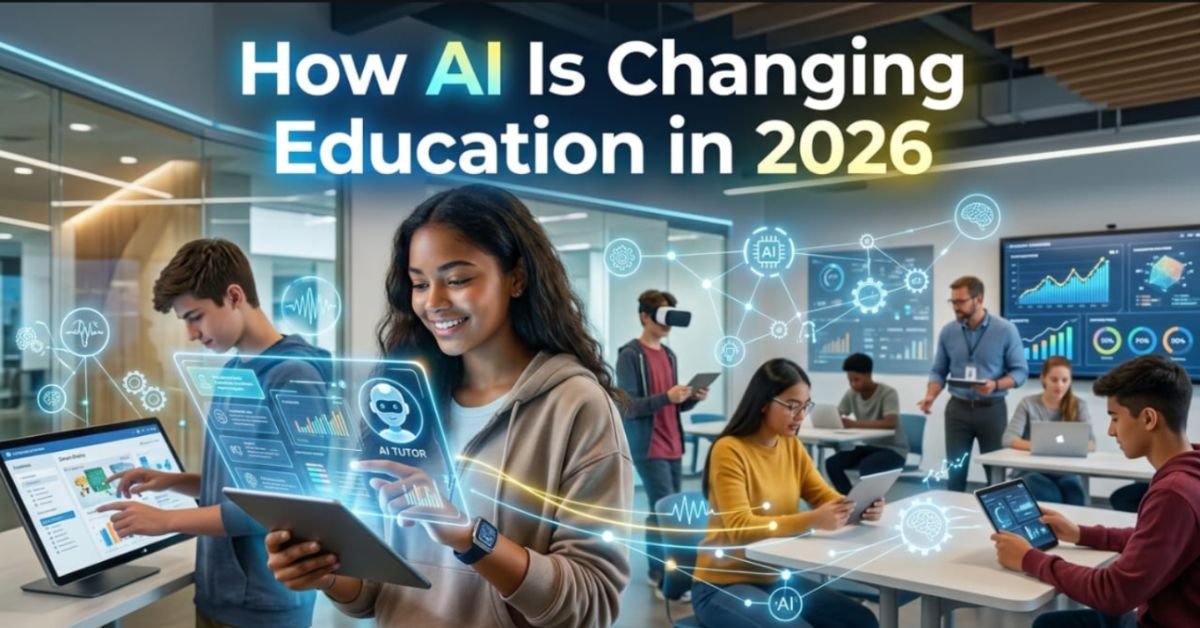
Artificial intelligence, AI really, has moved from being sort of experimental technology into a real important part of modern educationBy 2026, schools, universities, teachers, and students are already leaning on AI-powered tools for learning, research, lesson planning assessment, communication, and even personalized education. And it is not only about handing out facts anymore. Modern AI systems can read what a learner is asking, shift the way they explain things, generate learning materials, and then deliver rapid feedback, like right away, when it matters.
One of the most obvious changes AI is bringing is personalization. In regular classrooms, teachers often end up following the same lesson and the same pace for the whole group, even if each student has different abilities, different needs, and yeah it feels like you just cant adjust fast enough.. With AI, the system can analyze performance and then provide explanations, extra exercises and recommendations based on the student’s own progress. So learning becomes more flexible and students can spend more time on the topics they find difficult, without being forced to “catch up” at the same speed as everyone else.
Still, AI is not just taking over traditional education. Instead, its bigger role is to help teachers and students, and to make the whole educational process more efficient. Teachers can use AI to cut down on repetitive administrative tasks , while students can treat it like a learning companion or a study guide. But at the same time, schools need clear guidelines, because there are risks like plagiarism, misinformation, overreliance on technology, and using AI in ways it should not be used. The future of education will likely depend on getting that right balance between artificial intelligence and human judgment, and also how responsibly people use it.
Personalized Learning Is Becoming More Powerful
AI is making personalized learning a big deal in education , at least it feels that way in the way people talk about it lately. Instead of handing each student the exact same material, AI systems can notice where someone is getting stuck or kind of losing the thread, then they suggest extra explanations or maybe more guided practice. So for example, if a student keeps making the same kind of mistakes in mathematics , an AI learning platform can start with clearer examples first, and then gradually nudge them toward more challenging problems.
What’s nice here too is that it can help advanced students not just sit there feeling bored, or kind of checked out. If a learner shows they really understand, the AI can recommend tougher exercises and related subjects. So, students can move at different tempos without being stuck, on the speed of the whole classroom.
AI Is Changing the Role of Teachers
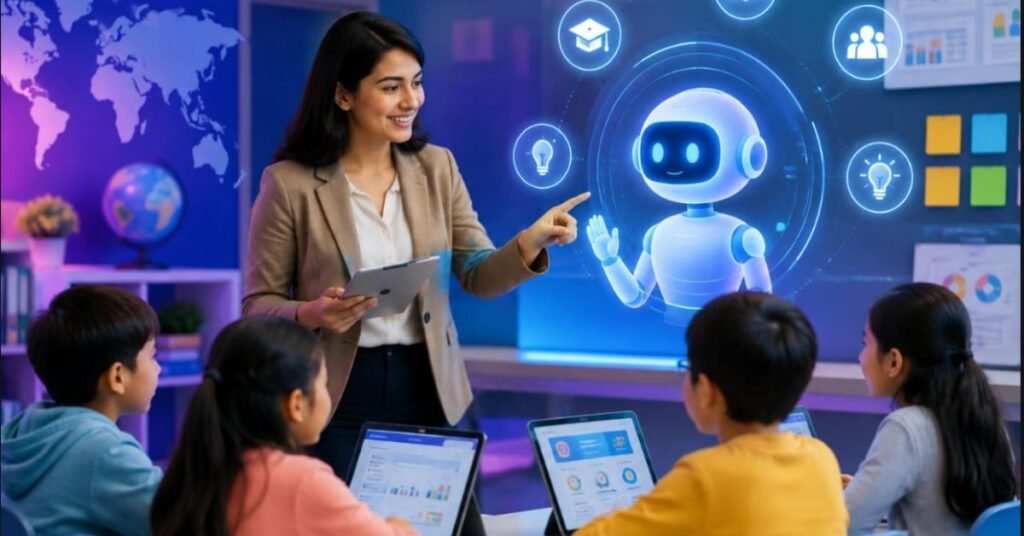
AI isn’t really wiping out the importance of teachers, it’s more like it shifts what teachers end up doing with their time. Stuff like sketching out basic lesson outlines , making practice questions, condensing educational material, and drafting varied versions of activities can often be helped by AI, more or less in the background.
So in that way teachers can put more effort into tasks that lean on human skills—like mentoring, running classroom discussions, giving emotional support, leaning into creativity and basically noticing the individual student right in front of them. AI can throw info at you fast, but teachers are still the main key for judging whether the information actually fits, and for deciding how it should be used in real life, not just in theory.
Key Points :
- Coming up with lesson plans and sort of classroom activities
- Generating little quizzes and practice questions, sometimes
- Reworking explanations so they fit different learning levels
- Offering ideas for projects and homework assignments
- Making study materials and short summaries
- Cutting down on repetitive administrative tasks, honestly
AI Tutors Provide Instant Learning Support
In 2026 , AI-powered tutors are turning into a big part of schooling, as more and more classrooms will rely on themStudents can shoot questions almost any time, then get answers and explanations right away, without sitting around for the next lesson. It really helps when people are studying solo, or trying to get ready for exams, you know, a bit faster. One good part is that an AI tutor can break down the same concept in different ways, sometimes with a slightly different angle, like using another learning style.
So if a student doesn’t click with a more technical explanation, they can request something easier, maybe a step by step walkthrough, or a real world analogy, or even a smaller example that gets to the point. Because of that, the entire flow feels a lot more interactive than just reading a textbook, and re reading the same passages over and over.Still , students shouldn’t forget that an AI tutor can make mistakes ,so it’s smart to double check important stuff.. Any AI-generated answer, should not just be assumed as correct, especially when it comes to academic research. Students need to check key points against dependable educational sources and keep building their own critical thinking skills.
AI Is Transforming Assessments and Feedback
Making really solid educational materials can take a lot of time, like more than people expect, even more than teachers think at first. With AI tools, educators can still help themselves put together quizzes, examples, worksheets, discussion prompts, short summaries, and even those first steps, like introductory explanations, that usually set the tone. Also, teachers can tell the AI to generate several versions of basically the same activity.
So one group of learners might get beginner minded questions, while another group is ready for more advanced problems. That way, differentiated instruction becomes easier to handle, though it’s not fully automatic, obviously. Even so, AI produced content really should be reviewed before it gets handed out. Teachers need to verify the facts, tune the wording or at least make it flow better, adjust the difficulty, and think about the cultural context. Also take time to double check that the material actually supports the learning objective it claims to match, because otherwise it can drift a bit.
Education Is Becoming More Accessible

AI can maybe make education more accessible for people with various learning needs, it sort of opens doors. With translation tools students can grasp the educational content in the languages they feel most at ease, even when the materials aren’t originally there. And then speech-to-text paired with text-to-speech can support those learners who struggle with reading, or writing. This kind of assistive tech can turn a tough lesson into something more navigable and clear.
AI can also help adapt educational materials. A complex explanation can be simplified, while written information can potentially be converted into an audio-friendly format. These capabilities can make digital learning environments more flexible.Accessibility really matters, because students don’t all come from the same educational background , they vary a lot in language skills and also in how they prefer to learn. With AI, additional help can be offered too without forcing every student to take the exact same learning route.
Key Points :
- Learn from anywhere.
- Access lessons anytime.
- Get personalized support.
- Learn at your own pace.
AI Is Improving Educational Content Creation
Making really solid educational materials can take a lot of time, like more than most people expect, really. With AI tools, educators can still sort of help themselves generate quizzes, give examples, make worksheets, craft questions for discussion, write short summaries ,and even those very first pieces, like introductory explanations, that usually set the overall tone.Also, teachers can ask the AI to produce a few versions of basically the same activity. So one set of learners might get beginner oriented questions, while another group is already ready for more challenging, harder problems.
That way differentiated instruction becomes a bit easier to manage, not totally automatic though, obviously.Even so, AI generated content really should be checked and reviewed before it gets handed out. Teachers still need to confirm the facts, smooth out the wording, adjust the difficulty level and, well, think about the cultural setting too . Also do a final double check, that the material actually supports the learning objective it says it fits with.
AI Is Changing How Students Do Research
In 2026 students will have access to AI tools that kinda help them brainstorm research topics, sort and arrange ideas, clarify difficult concepts , and also flag what might be good questions for further inquiry.. In a way, this might make the early stages of research quicker and more interactive, too.But there’s a pretty big difference between using AI to help you research, and letting AI just do the whole research by itself. Students still need to learn how to evaluate sources, maybe double check facts, confirm claims, notice bias, and then build up their own arguments instead of dumping everything on a mode.
Otherwise, it turns into something like paper assembling rather than real thinking.So schools and universities are facing a key question, basically how can students use AI yet still grow genuine research and writing skills. The likely answer is going to be clearer academic guidelines, plus more focus on showing the learning process, not just handing in a final document as if it’s done.
AI Is Creating New Challenges for Academic Integrity
With the growth of generative AI, some new, sort of messy challenges showed up around plagiarism and academic honesty. Students might use AI to generate essays, answer questions , write code, or just finish assignments quickly, without actually building the core skills underneath all of that.But this is not to say that every single use of AI is automatically dishonest. The real sticking point is usually about whether the use matches the rules set by the school or university , or maybe how it is supposed to be used in the first place.
. In certain cases, AI can be ok for brainstorming, or for careful editing, while in other settings students are expected to complete the task on their own, independently.Schools and universities can deal with this by making sure there are clear policies for acceptable AI use. They can also redesign assignments so they lean more on personal reasoning, brief presentations, classroom dialogues, drafts , hands-on projects, and other kinds of assessment that clearly show actual understanding, not just a polished output.
AI Is Helping Students Prepare for Future Careers
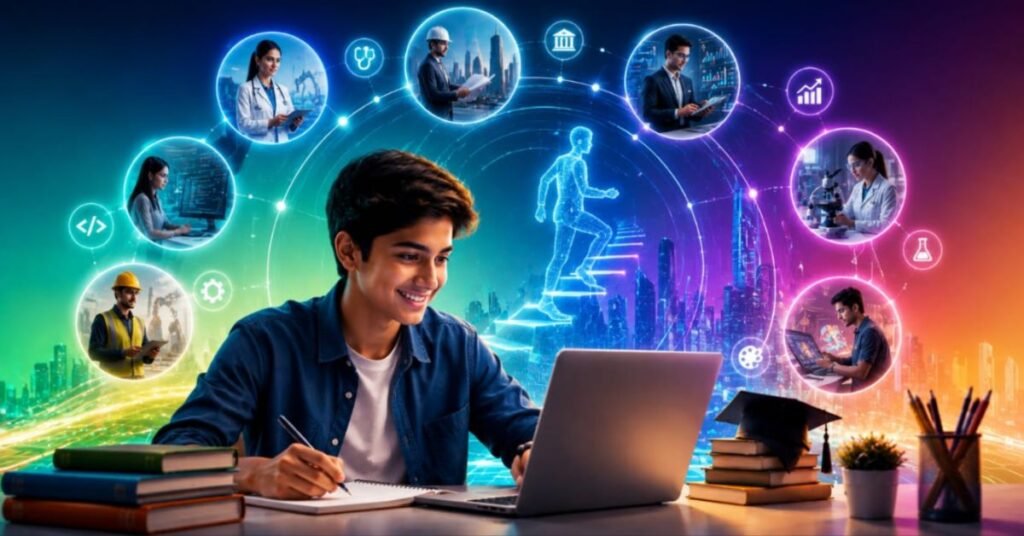
The workplace is changing, very rapidly, and students need to grow skills that will probably stay worth something even in an AI assisted economy. So, education is getting more and more about not just remembering facts, but also creativity, solving tricky things, communication, digital literacy, and also critical thinking, yes even the part that makes you pause and question.
Figuring out how to work effectively with AI can turn into another real professional skill, the kind you actually use day to day. Students may need to learn how to ask better questions , verify whether the AI output is trustworthy, adjust the results so they fit the situation, and, just as importantly, notice when human expertise is needed, not something “optional” you can forget.At the same time students shouldn’t end up depending on AI for every single task. The most valuable workers in the future are probably the ones who can blend technological tools with human judgment, side‑ways imagination, shared effort, and area based knowledge. Not simply click, push buttons and hope it all works out.
Key Points :
- Builds digital skills.
- Improves problem-solving.
- Teaches AI tools.
- Supports career learning.
AI Is Making Learning More Interactive
AI can turn passive learning into something more interactive, like really, not just sit and absorb. Instead of reading a chapter straight through, students can ask questions , ask for specific examples, test their own understanding and then get back immediate explanations.For example, a history student might ask an AI system to break down an event from multiple perspectives. A science student could use an AI assistant to wander through hypothetical situations, you know, just to see what changes.
A language learner may practice conversations and then get gentle corrections right away.With this sort of interactive style , students might start to show up more as active participants in their education. Instead of waiting for information to be delivered , they can poke around topics through questions and small experiments, kind of like learning by doing , not only by receiving.
AI Is Supporting Administrative Work
Education is more than just teaching, you know. In schools and universities, there’s also scheduling, communication, student records, admissions, paperwork, and lots of other admin kinds of stuff that tends to pile up. AI can help with some of those repetitive processes, even when nobody really asked for it.If administrative workloads go down, educators and staff can put more time into students and the whole educational planning thing, instead of burning hours on forms.
AI based systems might also help arrange information better, and answer those routine questions that always come back, in the same way.Still, institutions need to be careful about using AI when student data is involved. Privacy, security, transparency, and responsible data management should stay front and center whenever personal information is processed by an automated system, because, well, it’s not optional.
The Importance of Human Skills in an AI-Powered Classroom
As AI becomes more capable, human skills become even more important. Students need to learn how to question the information , communicate ideas, work together with others, solve unfamiliar problems, and make responsible choices. In other words they need more than content, they need judgment.Teachers also provide something that AI cannot quite fully substitute for.
Human relationships. A teacher can spot when a student feels discouraged, lift their confidence, understand the small shifting dynamics in a classroom, and offer real mentorship that sticks. That kind of support feels lived in, not just processed.So the strongest educational model in 2026 isn’t really “AI versus teachers.” Instead, it is some blend of AI technology and human know-how. AI can manage certain tasks efficiently, while teachers help students move toward deeper understanding, plus responsible use of
FAQs
How is AI changing education in 2026?
AI is kinda reshaping education, with personalized learning, plus AI tutoring, automated feedback and even the creation of educational content. It also helps with accessibility tools, and can be used for research assistance and administrative support. Because of all that, students can get more flexible help, faster and right when they need it, not just later.
Will AI replace teachers?
AI probably won’t completely replace teachers, because education still needs human connection, guidance, emotional awareness, judgment and classroom control. So instead of fully swapping, AI can help by taking on some repetitive chores, and also giving teachers extra learning materials resources. It feels a bit like it can support the process, not fully step in.
How can students use AI responsibly?
Students might use AI for brainstorming, giving explanations, doing practice, supporting research, and helping with tricky concepts, as long as they keep to their school’s academic integrity rules. They should double check key details, and they also need to be careful not to hand in AI-generated work as if it’s their own, when that’s not allowed, period.
What are the biggest disadvantages of AI in education?
Big worries are that the information might be wrong, and there could be academic dishonesty , plus privacy risks, also a growing dependence on technology, less chance to build independent skills, and uneven access to more advanced AI tools.
Conclusion
AI is already changing education in 2026, kind of, by making learning feel more personalized and accessible… also, more engaging. With it, students can get help making sense of those difficult topics, practice their skills with more repetition and learn at their own rhythm, which is often the part that really works. And yeah AI can make it easier to dig into the material in different ways, instead of just following one path, or one idea and be done.
Teachers can use AI tools as well, not only the students, to save time on everyday tasks and put together learning materials that are clearer or more fitting. Still, AI should stay in a supporting role, not fully take over, because teachers bring the context, the care, and the judgement. If we use it responsibly it can make education more effective, and it can help prepare students for a future that’s clearly pushed by technology, even if things change fast.

Wellcome to growthwavexpro im Dr.sahil an Ai-powered SEO.and content writer with 3 years of experience.
i help websites rank higer.grow traffic .and look amazing.my goal is to make SEO and web design simple and effective for everyone.lets achieve more together